Most food waste, and a lot of overspending, comes from shopping without a plan: buying ingredients for meals that never happen, or ordering takeaway because nothing is ready. A short weekly planning session fixes both.
Here's a routine that takes about half an hour once you've done it a couple of times.
Step 1: Shop your own kitchen first (5 minutes)
Before planning anything new, look in the fridge, freezer and cupboards. Write down:
- Anything that needs using up this week (open vegetables, leftovers, dairy near its date)
- Freezer meals that are ready to go
- Staples you already have plenty of (rice, pasta, tins, spices)
These go into the plan first. Every meal built from food you already own costs you almost nothing extra.
Step 2: Decide how many meals you actually need (3 minutes)
Look at the week honestly. Which evenings are you home to cook? Which days are busy? A plan for seven elaborate dinners that turns into three takeaways is worse than a plan for four simple ones.
A realistic week might be:
| Day | Plan |
|---|---|
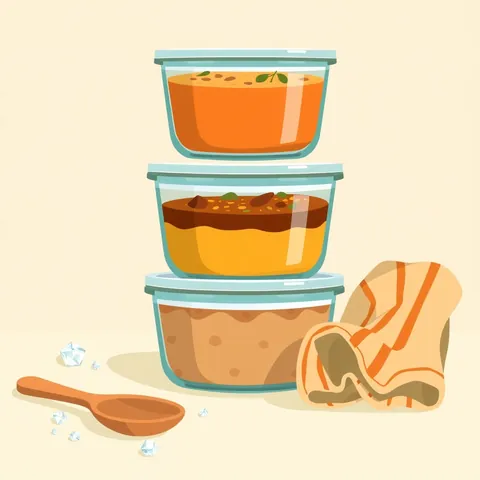
| Monday | Cook: big pot of something (makes 2 dinners) |
| Tuesday | Leftovers from Monday |
| Wednesday | Quick meal (15 minutes or less) |
| Thursday | Freezer meal |
| Friday | Cook: something simple and a bit fun |
| Weekend | Batch-cook for next week, plus one relaxed meal |
Step 3: Plan around shared ingredients (10 minutes)
The cheapest weeks reuse the same ingredients in different meals. If you buy a bag of carrots, a big pack of onions and a tin of chopped tomatoes, plan meals that all use them. Half-used ingredients are where budgets leak.
A few pairings that work well:
- Chili → stuffed potatoes. Same beans, tomatoes and spices.
- Roast vegetables → soup. Blend leftover roast veg with stock.
- Rice dish → fried rice. Cook a double batch of rice on day one.
Step 4: Write the grocery list from the plan (7 minutes)
Go meal by meal and list only what you don't already have. Group the list by store section so you're not walking back and forth. Then set a spending limit for the trip and write it at the top.
Write the list before you look at store offers. Offers are only a saving if the item was already on your list or fits a planned meal.
Step 5: Put the plan where you'll see it (2 minutes)
A plan in your head is gone by Wednesday. Stick it on the fridge, keep it in a notebook, or use a planner. What matters is seeing tonight's dinner, and tomorrow's defrosting job, at a glance.
Keep it going
After a few weeks, save the plans that worked. Rotating through six or eight tested weekly plans makes planning even faster, and the grocery lists are already written.
Cooking for two? The same routine works; just plan more "cook once, eat twice" meals so ingredients don't go off before you use them.