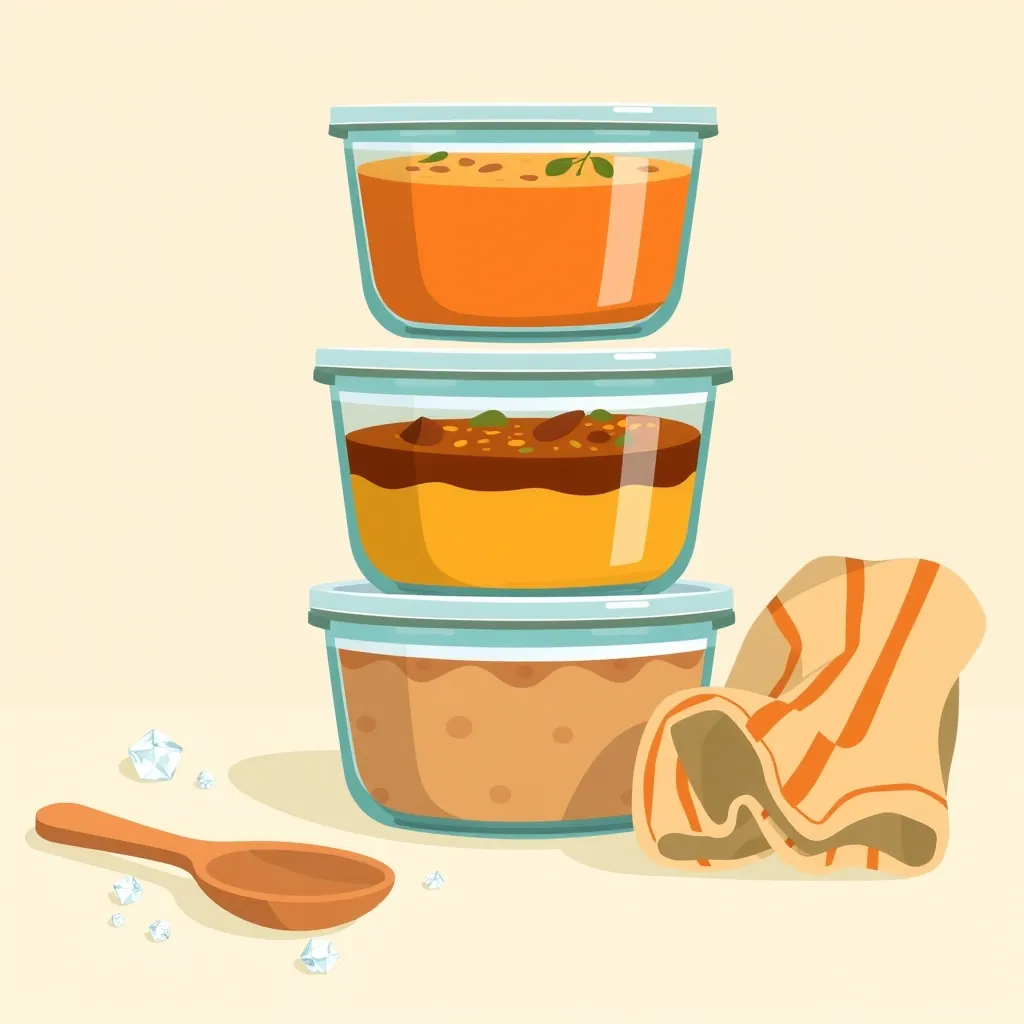
Cooking once and eating two or three times is one of the easiest ways to spend less on food. A freezer turns a cheap batch of chili or soup into several future dinners, instead of leftovers you throw away on day five.
This guide covers the basics: what freezes well, what the freezer actually does for safety, and how to thaw without taking risks.
Safety vs. quality: what the freezer really does
The US Department of Agriculture's food-safety service puts it simply: food kept constantly at 0 °F (-18 °C) stays safe indefinitely. Freezing doesn't kill bacteria. It makes them dormant, so they can't multiply.
What does change over time is quality. Texture, flavour and moisture slowly decline, and freezer burn shows up on food that isn't wrapped well. So a "use by" date on a freezer label is about taste, not safety.
Check your freezer really runs at 0 °F / -18 °C. A cheap freezer thermometer is the only way to know.
Foods that freeze well
These are the usual budget batch-cooking staples, and they all freeze well:
- Soups, stews and chili (leave a little headspace in the container, because liquids expand)
- Cooked beans, lentils and grains such as rice
- Tomato-based sauces and ragù
- Casseroles and baked pasta dishes
- Cooked, shredded or sliced meat in some sauce or broth
- Bread, tortillas and muffins
- Raw chopped onions and peppers for cooking later
Foods that don't freeze well
USDA's own examples of foods that don't freeze well are mayonnaise, cream sauce and lettuce. More broadly, watch out for:
- Salad greens and raw watery vegetables such as cucumber, which turn limp
- Mayonnaise- and cream-based sauces, which can separate
- Fried foods, which lose their crunch
These are quality problems, not safety ones. A cream sauce that has separated is still safe; it just isn't pleasant.
Label everything
Unlabelled freezer boxes are how food gets wasted. Put three things on every container:
- What it is ("beef and bean chili", not "chili")
- Date frozen
- How to reheat it (for example: "thaw overnight in fridge, simmer 10 min")
A running inventory list on the freezer door or in a planner saves you digging through the freezer and helps you use the oldest food first.
Thawing safely
Once food thaws, the dormant bacteria wake up and grow as fast as on fresh food. So thaw in a way that keeps the food cold:
- In the fridge. Slowest, safest, and the easiest to plan: move tomorrow's dinner down tonight.
- In cold water. Sealed bag submerged in cold water, water changed every 30 minutes. Cook right after.
- In the microwave. Cook immediately afterwards, because parts of the food may start to warm.
Don't thaw on the kitchen counter.
Can you refreeze it?
According to USDA guidance:
- Food thawed in the fridge can be refrozen without cooking, with some loss of quality.
- Food thawed in cold water or the microwave should be cooked before refreezing.
A simple batch-cook routine
- Pick two freezer-friendly recipes that share ingredients (for example, a bean chili and a lentil soup both need onions, tomatoes and cumin).
- Buy the shared ingredients in larger packs, where the unit price is usually lower.
- Cook both on one afternoon; cool quickly, portion, label, freeze.
- Plan the next two weeks' dinners around what's in the freezer before you write your grocery list.
Source for the safety guidance above: USDA FSIS, Freezing and Food Safety and The Big Thaw: Safe Defrosting Methods.